
ClaimMark-P patent drafting: from one inventor conversation to a full application you can check line by line.
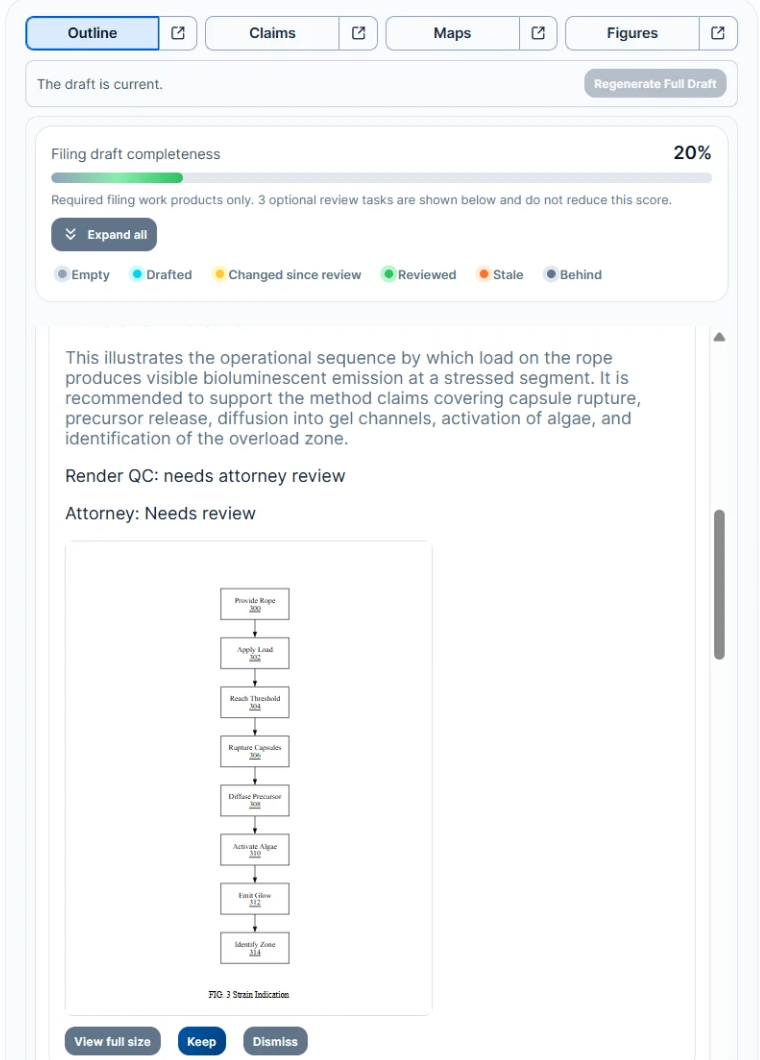
You talk to the inventor. ClaimMark-P turns that conversation into claims, a specification, and figures, and every sentence shows where it came from. You make every legal judgment; it does the typing.
Reality check: clients pay $8,000 to $15,000 for a patent application, and most of that is your hours writing it. A ClaimMark-P draft costs $500, so your hours go to the claims and the judgment calls, and a fixed fee stays profitable.
Fee figures from Jürgen Vollrath, What Your Patent Attorney Doesn't Tell You.
How a draft gets made: six steps, and you decide at each one.
- 01
The inventor explains it once
A guided invention record in the inventor's own words. Gaps, missing actors, and undefined terms come up before drafting starts, so the draft is built on a complete disclosure.
- 02
The prior art is searched first
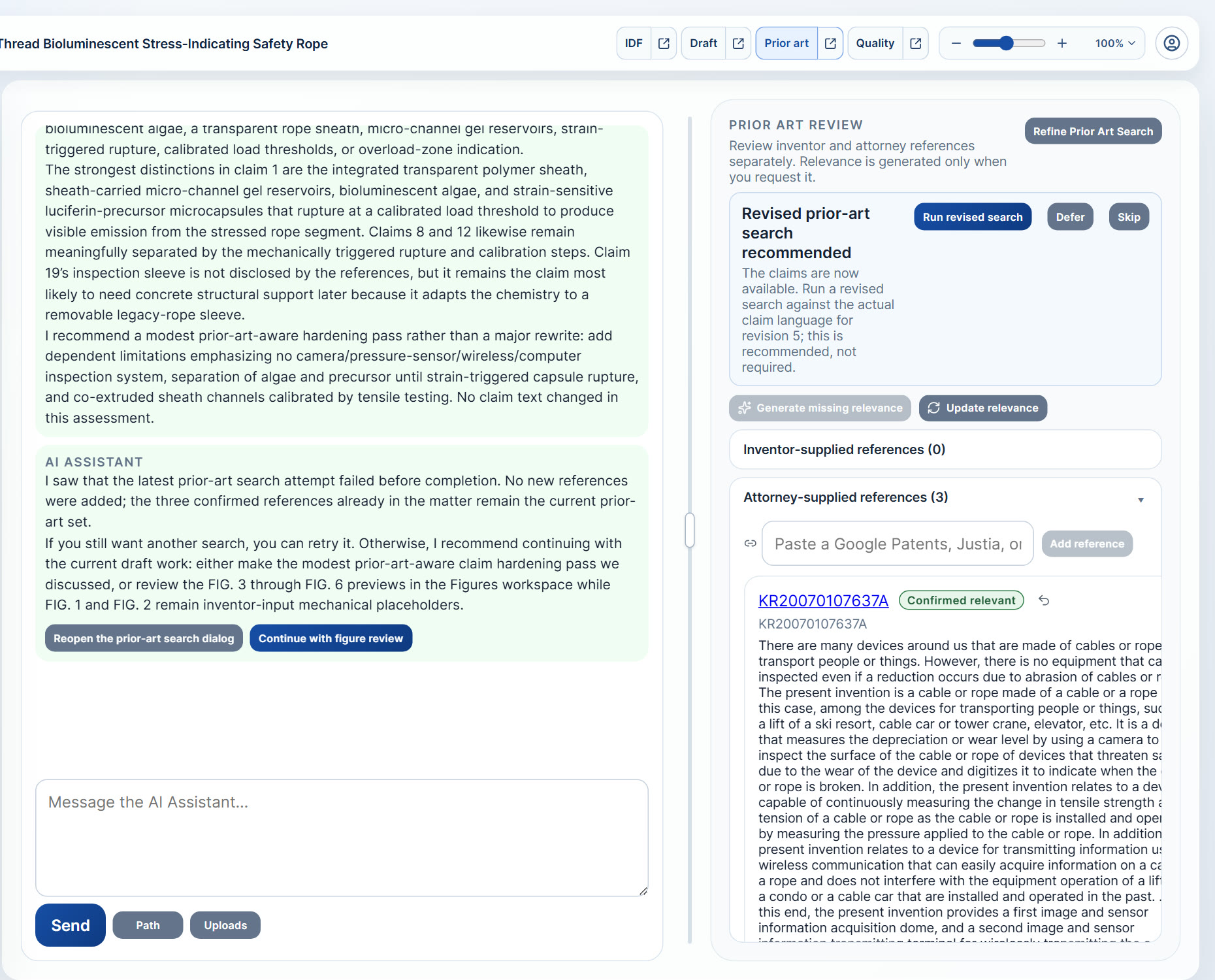
Each candidate reference comes with the reason it matters, and searches that fail are reported, not hidden. Claims are then drafted to distinguish the closest art.
- 03
Independent claims come first
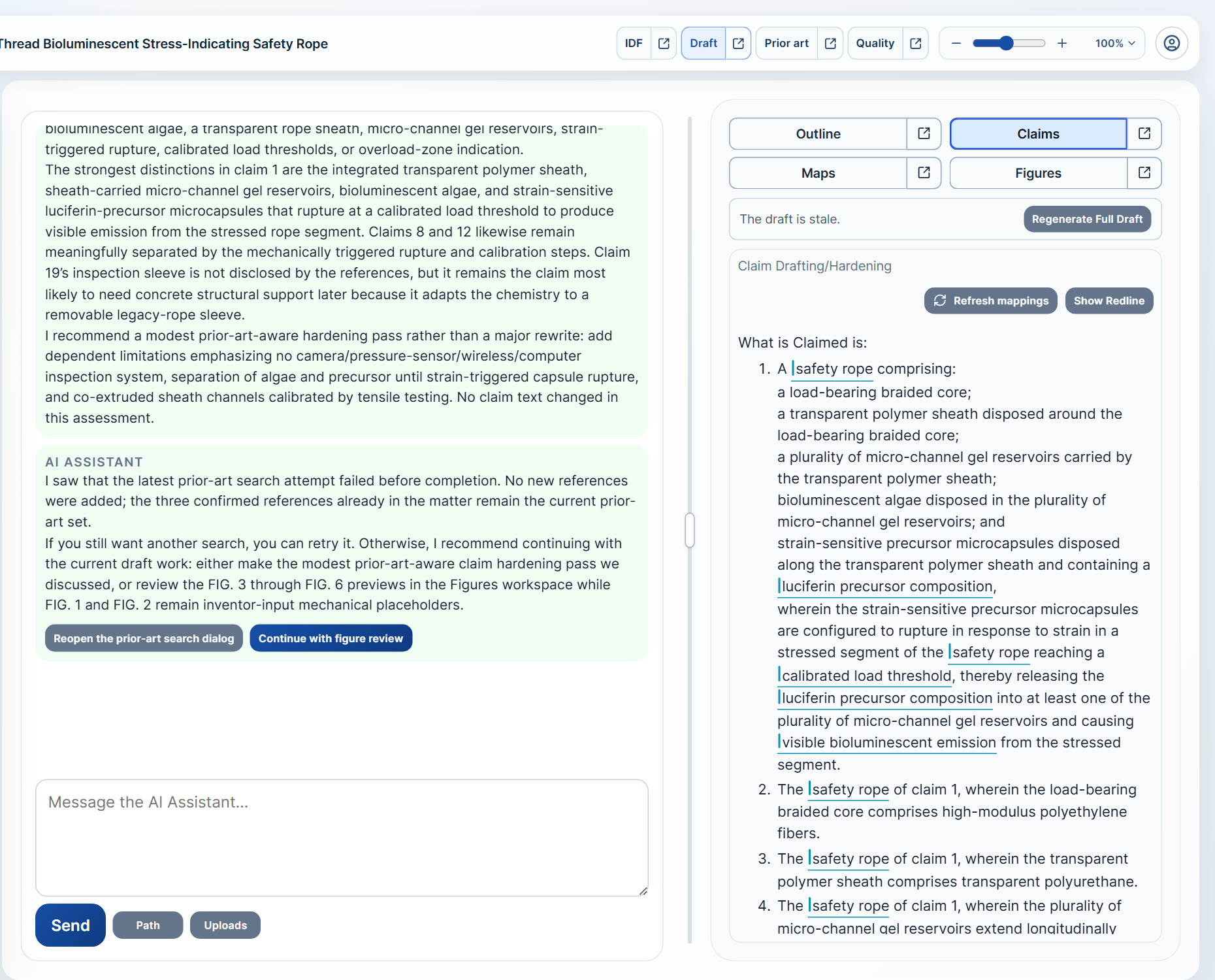
System, method, and computer-readable-medium claims built from the invention record, then dependents as fallback positions. Change the strategy in plain words and the claims follow.
- 04
Every section, mapped to the claims
All nine filing sections, the abstract, and an executive summary for the client. Each paragraph shows which claim limitations it supports.
- 05
Figures with matching numerals
System diagrams and flowcharts whose reference numerals match the specification. Keep, redraw, or drop each one; placeholders mark where inventor drawings are needed.
- 06
A Word file you sign and file
The finished package opens in Word, formatted for filing. You edit, sign, and file. ClaimMark-P never files on your behalf.
What you check: problems come to you as decisions, never as a score.
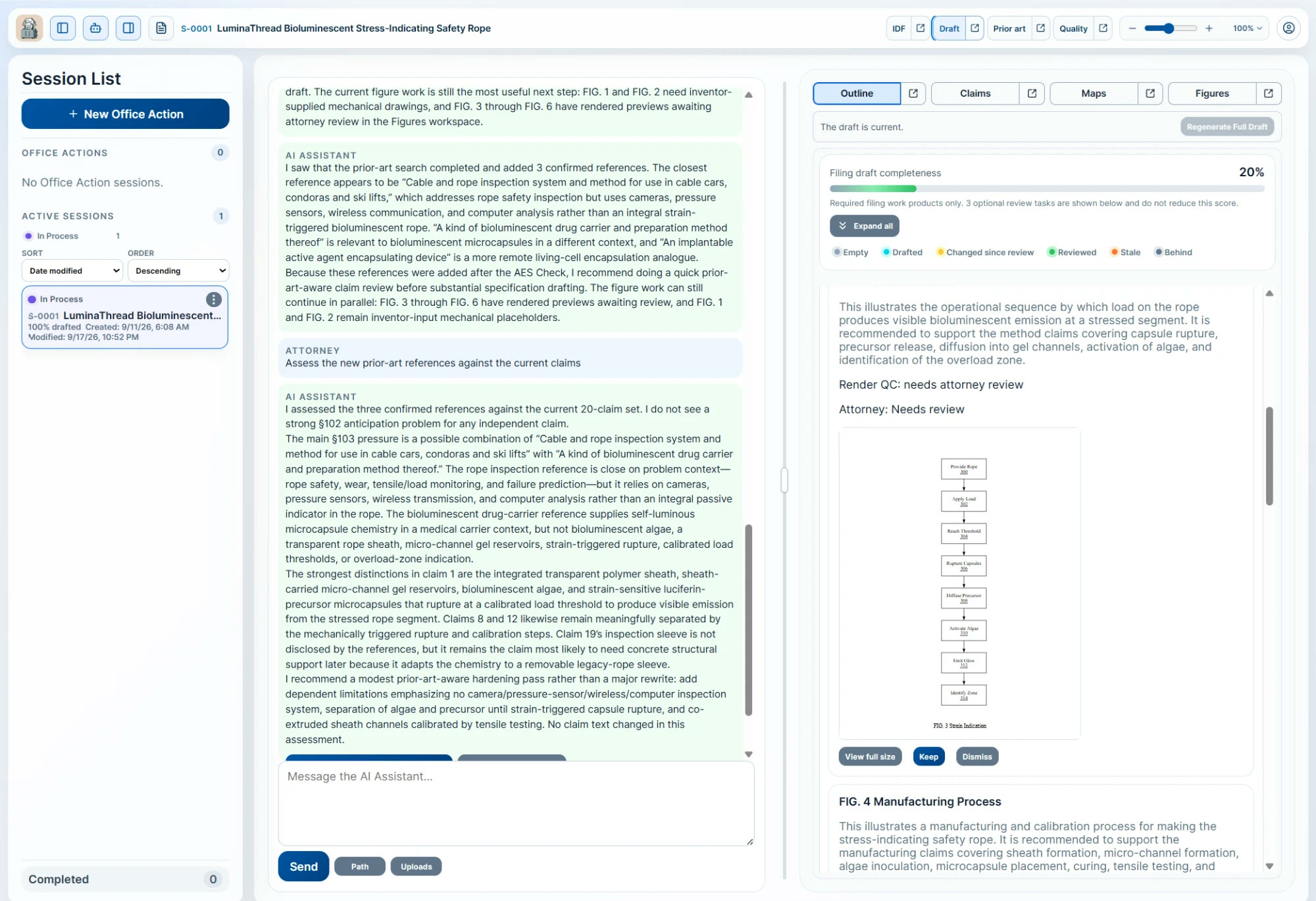
Terminology consistency, antecedent basis, §112 written-description and enablement support, and a whole-specification review for §101, §102, and §103. Edit a claim and ClaimMark-P marks exactly which sections, figures, and reviews are now out of date, so the draft never drifts out of agreement with itself.
One complete software-patent run: 20 claims, 9 of 9 sections, 6 figures, and a Word file.
In our final QA run, one matter produced a corrected disclosure, prior-art output, 20 claims, an abstract and executive summary, six figures, all nine filing sections, quality and support material, and a Word export.
Internal evidence; independent attorney and charter-customer validation is under way.
- Claims
- 20
- Filing sections
- 9/9
- Figures
- 6
- Export
- DOCX
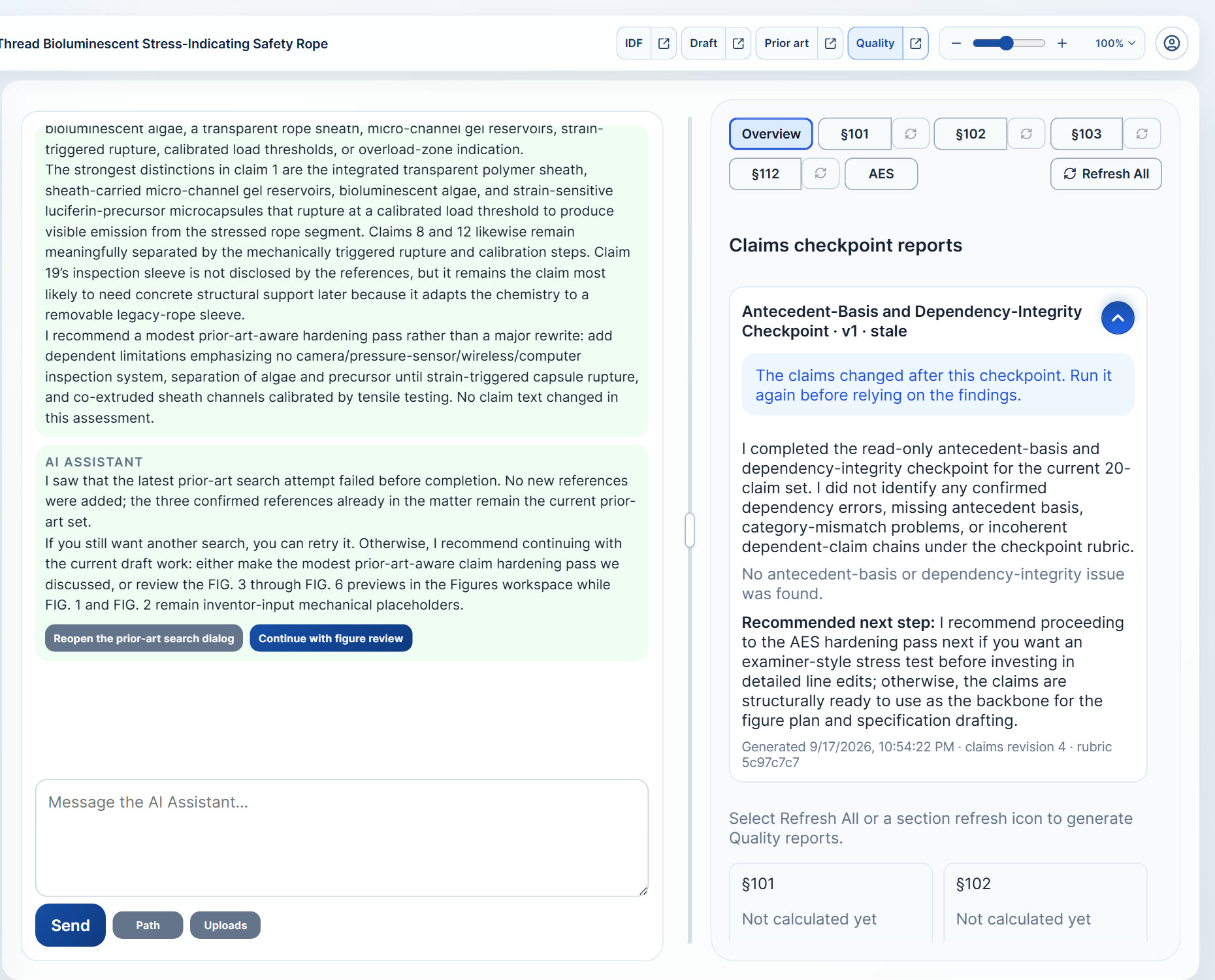
The workspace: the inventor record, the assistant, and the live draft side by side.
$500 per application, or Package 1 at $1,400 a month for up to four.
Priced by the applications your firm drafts, not by the number of attorneys using it.